ServicesRain Chains
Rain Chains in Kiawah Island
We install rain chains that carry roof water from your gutter outlet to the ground in a visible, controlled column. Each one is sized to the roof area it drains, attached with a proper outlet adapter and anchored at the base, and you get the full scope in writing first.
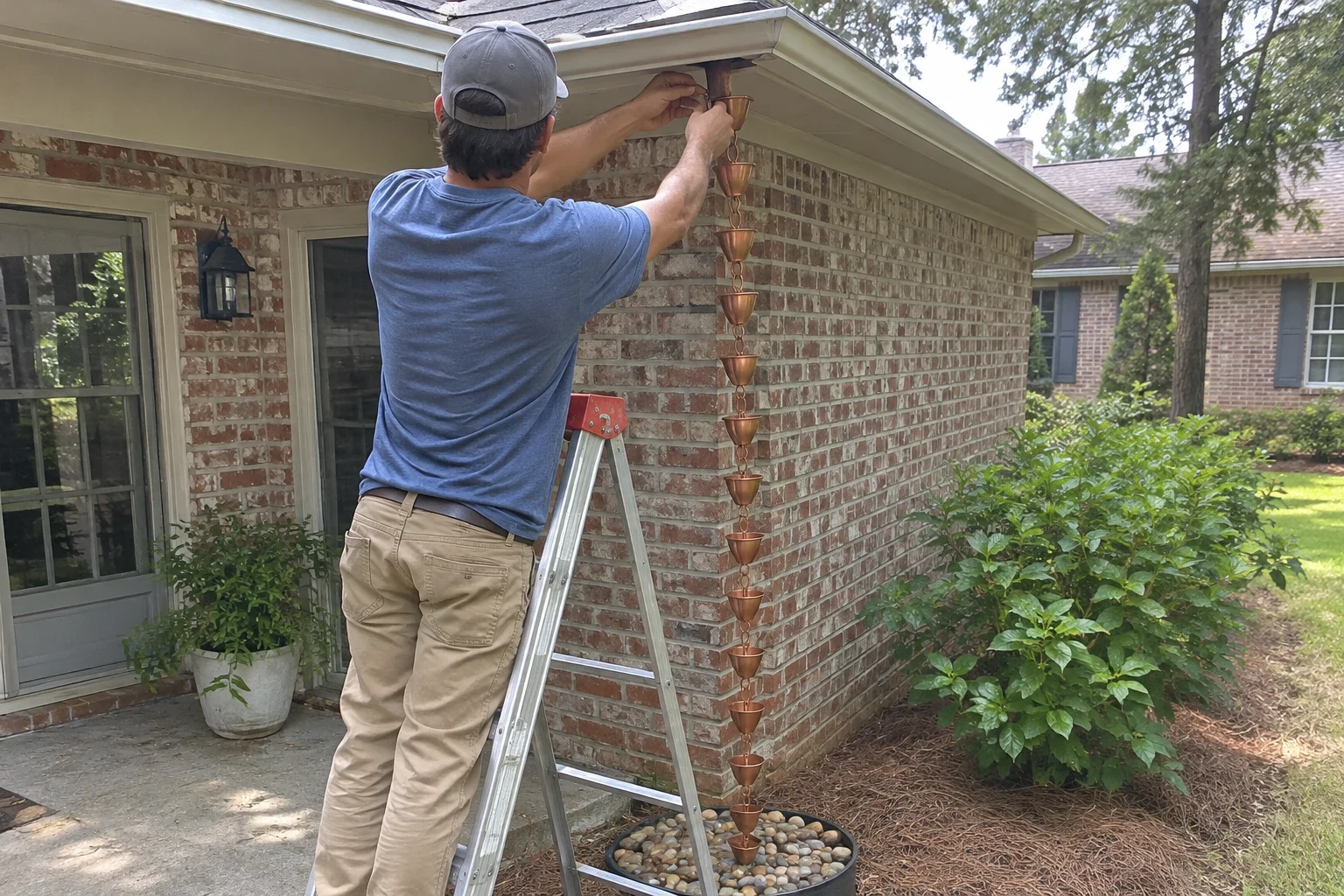
What a Rain Chain Does and When It Fits
A rain chain hangs from a gutter outlet and guides water down by surface tension. Water clings to the links or fills a series of open cups, then drops into a basin or gravel bed at the bottom. It works well on porches, entries and short roof sections where you want the water to be seen and heard instead of hidden.
It is not the right answer everywhere. A cup chain moves noticeably more water than a link chain, but neither keeps up with a large two-story roof plane in a summer cloudburst the way a closed pipe does. We look at how many square feet of roof feed each outlet, how close the outlet sits to walkways and doors, and how the ground slopes away from your home before we recommend one.
Before any work starts, we write down the chain style, the material, the attachment hardware and what we will do at the ground. If the gutter itself needs attention first, that shows up as its own line so nothing is added later.
What Our Rain Chain Installation Includes
- Chain and material selection
- We help you choose between link and cup styles in copper, aluminum or powder-coated steel. Near salt air, bare steel rusts quickly and can stain siding, so we usually steer coastal homes toward copper or aluminum.
- Outlet adapter or bracket
- The chain hangs from a gutter installer that sits in the outlet hole, or from a V-bracket bridging it. We match the fitting to the outlet diameter so water enters the chain instead of spilling around it.
- Outlet sizing and sealing
- If the existing hole is too small, too large or sealed poorly, we cut or adjust it and reseal the joint with gutter sealant. A leaking outlet drips down the fascia and rots it over time.
- Ground anchoring
- We secure the bottom of the chain with a stake or a weighted basin so wind does not swing it against siding, trim or window glass.
- Drainage at the base
- We set a basin, a decorative bowl or a gravel bed, and check that the soil grades away from your foundation so the water keeps moving once it lands.
Signs a Rain Chain Makes Sense for Your Home
An outlet over a porch or entry
A short roof over a front step or back porch is the classic spot. The roof area is small, and a chain looks far better than a pipe at eye level.
A loose or splashing chain you already have
If an existing chain swings in wind, sprays water on the wall or dumps over the gutter lip in heavy rain, it is likely undersized or missing an anchor and adapter.
Water spilling at a corner
When a gutter overflows at one spot because there is no outlet nearby, adding an outlet with a chain can relieve that section, provided the roof area it drains is modest.
Erosion below the drip line
Bare soil, washed-out mulch or a trench under the eave means water is landing without control. A chain and basin concentrate it in one place you can manage.
A stained or rusting chain
Orange streaks on siding or concrete usually come from uncoated steel. Replacing it with copper or aluminum stops the staining.
How a Rain Chain Install Runs
- 1
Look at the roof and outlet
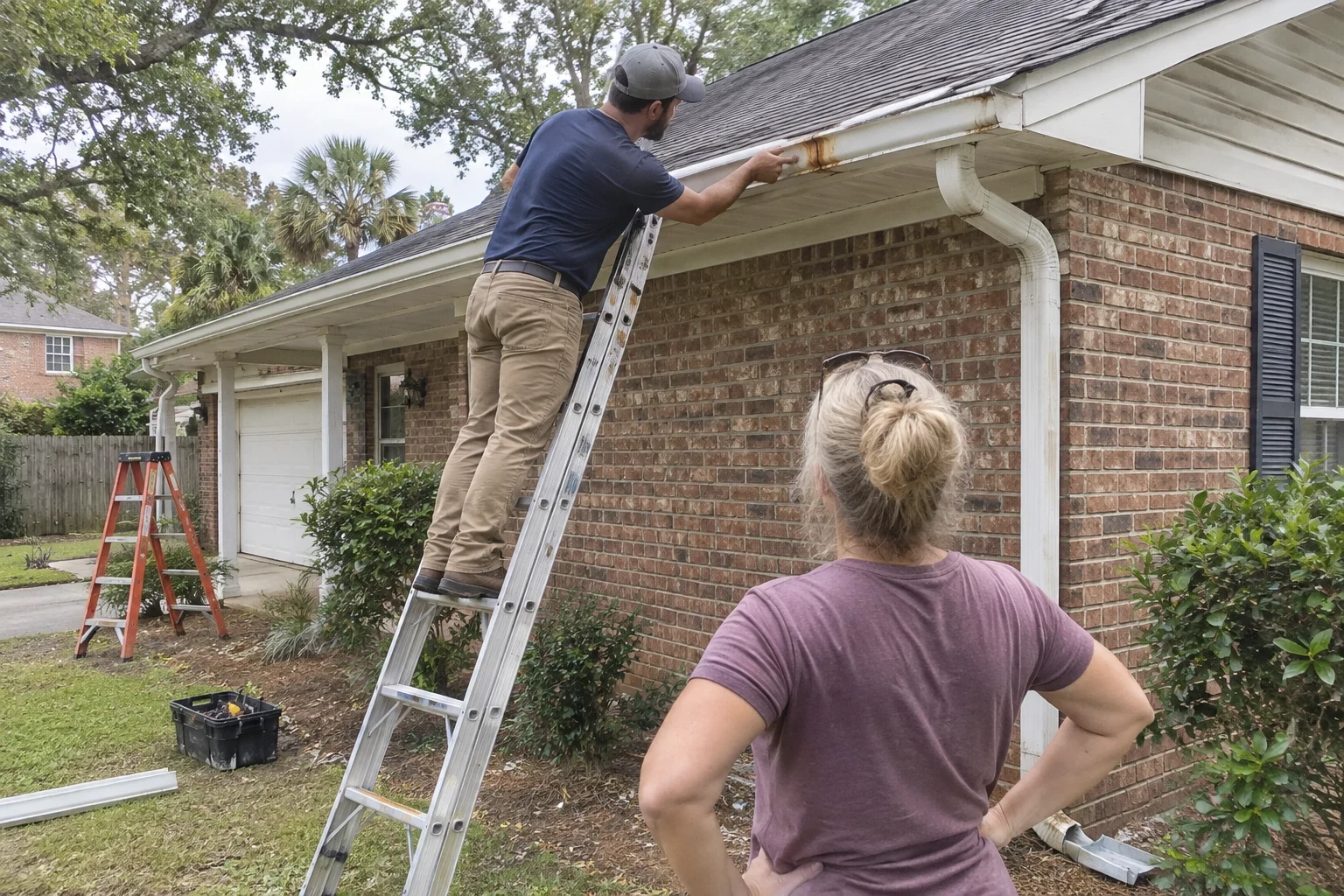
We measure the roof area feeding the outlet, check the gutter for sag or loose hangers, and note the eave height so the chain length is right.
- 2
Written scope and estimate
You get a written estimate listing the chain, material, length, fitting, any outlet work and the base treatment. If gutter repair is needed for the chain to work, it appears there as a separate line.
- 3
Prepare the outlet
On install day we cut or resize the outlet if needed, seal it and fit the gutter installer or V-bracket.
- 4
Hang and anchor
We hang the chain plumb, trim or extend it to length, and anchor the bottom to a stake or basin so it holds steady in coastal gusts.
- 5
Set the base and test
We set the basin or gravel, confirm the grade runs away from the foundation, run water through the gutter to check the flow, then clear away cut-offs and packaging.
What Moves the Cost of a Rain Chain
Rain chain pricing depends far more on the material and what happens at both ends than on the chain itself. We explain each of these on your written estimate so you can see where the money goes and adjust the choices before anything is ordered.
- Style and material
- Cup chains use more metal than link chains, and solid copper costs more than aluminum or coated steel. Copper also ages to a brown and then green patina, which some owners want and others do not.
- Length
- A one-story porch needs a short run. A second-story eave needs a much longer chain and more care keeping it plumb and anchored.
- Outlet condition
- An outlet that needs to be cut, resized or resealed adds labor. A sagging or separated gutter section has to be fixed first, or the chain will never get the water it is meant to carry.
- Base and drainage
- A simple stake costs less than a basin with a gravel bed. If the ground slopes toward your home, regrading the landing spot adds time.
- Number of chains
- Several chains installed on one visit share setup time, so the cost per chain usually drops.
Rain Chain Questions
Something not covered here? (843) 306-2678
Can a rain chain handle heavy summer rain?
A properly sized cup chain handles moderate to heavy rain from a small roof area well. In the hardest downpours some splashing is normal, which is why we set a basin or gravel bed and keep chains away from doors. On a large roof plane, we will tell you honestly that a chain is not the right fit.
Can you add a rain chain to my existing gutters?
Usually, yes. We check that the gutter is pitched toward the outlet and firmly hung, then fit the chain to the existing outlet or cut a new one. If the gutter needs work first, we list that separately on the estimate.
Will the chain bang against my house in the wind?
Not when it is anchored. We secure the bottom to a ground stake or weighted basin so it stays in line even in strong gusts off the water.
Which material holds up best near the ocean?
Copper and aluminum both resist salt air. Copper weathers to a patina but does not rust, and aluminum stays its finished color longer. Bare or thinly coated steel tends to rust and can streak siding or concrete.
Is the installation covered by a warranty?
Yes. Our rain chain installation work carries a 2-year workmanship warranty. If a fitting, seal or anchor we installed fails because of how we put it in, we come back and correct it.
Talk Through a Rain Chain for Your Home
Tell us where the outlet is and what you have in mind. We will look at the roof area and the ground below, then give you a written estimate before any work begins.